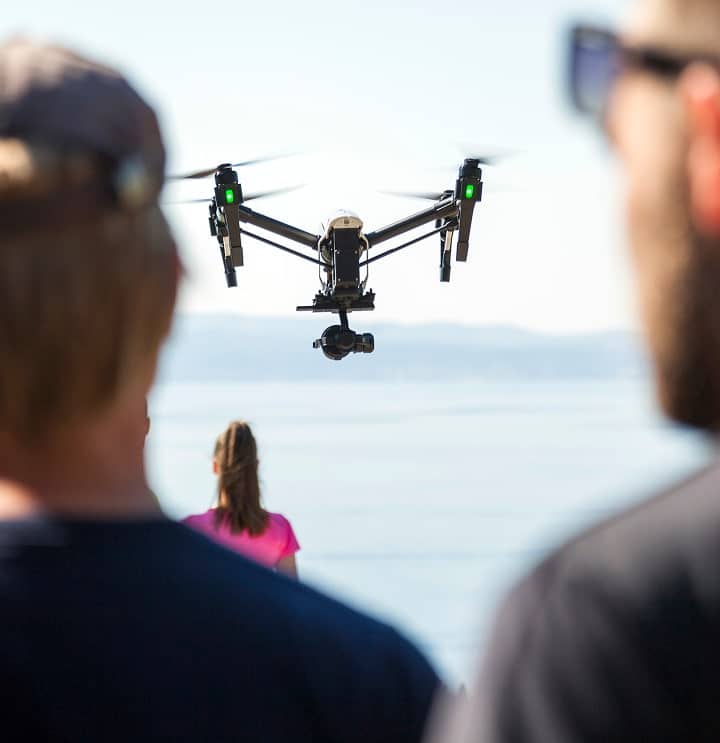
The allure is undeniable. Drone operators can obtain spectacular aerial views by flying their aircraft above the Australian coastline, inland lakes, and powerful rivers. Water provides pilots with unique visual opportunities which cannot be replicated through ground-based positions.
Operating over water is a necessity for professional photographers, cinematographers, and industrial inspectors.
Water is one of the most dangerous environments for drones. Your drone is at risk of total destruction when you operate over water, because there are no emergency landing areas, environmental conditions are unpredictable, and a single error can destroy your valuable aircraft and payload.
The difference between capturing a career-defining shot and watching your investment sink to the bottom often comes down to one thing: meticulous preparation and a deep understanding of the unique risks involved.
This guide provides a complete handbook for safe drone operations over Australian water bodies. These guidelines and safety measures will help both recreational flyers and licensed commercial pilots reduce risks while protecting their equipment during missions and holidays.
The Foundation of Success: Pre-Flight Planning and Preparation
The start of successful water flight operations occurs during the planning stages, before your aircraft takes off. The planning process is the most critical element for reducing risks. You should never rush through this critical phase, because the risks are simply too costly.
Get Organised: Your Flight Plan is Your Lifeline
When there is a lot of distance between your position and the closest safe landing area, there is no room for improvisation. A comprehensive flight plan creates peace of mind for pilots while lowering the chance of mistakes during flight operations.
- Visualise and Storyboard: Before fight take-off, you need to plan every shot you want to achieve. Visualise your flight route, essential observation points, and your desired camera positions. Conduct these test shots on dry land to validate your camera settings and verify your flight manoeuvres are doable.
- Check Your Airspace: Open water does not automatically grant open airspace access. The coastal regions have shipping lanes, low-flying aircraft zones and proximity to airports or military bases. Every flight requires you to verify airspace restrictions through CASA-verified drone safety applications for no-fly zones and temporary advisories.
- Become a Weather Expert: Weather conditions over water present distinctive challenges that differ from those on land. Weather patterns change suddenly while maintaining strong intensity levels than they do on dry land. Pay close attention to:
- Wind Speed and Direction: The speed and movement of wind become stronger when flowing across water, because it lacks natural barriers to slow it down. Check the weather forecast for ground-level wind patterns as well as wind conditions at your intended flight height. Your drone’s battery life will decrease rapidly when you attempt to fight against strong headwinds while flying back to your starting point.
- Gusts: Steady winds allow your drone to remain stable, but strong gusts create instability in the device. Flight delays should be considered when gust speeds exceed base wind speeds by a significant margin.
- Rain and Humidity: A drone that has not been weather-sealed will not survive a light unexpected rain shower. High humidity and salt spray will cause moisture to penetrate your equipment during long-term exposure.
Calibrate on Solid, Stable Ground
The essential sensor calibrations need to be performed on dry land before you initiate flight operations, especially when starting from a boat.
- Compass Calibration: The drone compass is highly sensitive to magnetic interference. A boat’s substantial metal structure, power system, and additional electronic components will disrupt the drone’s compass system, which leads to unpredictable flight patterns known as the “toilet bowl effect”, or complete loss of drone control. The compass should be calibrated on solid land surfaces and positioned in areas without electromagnetic interference.
- IMU Calibration: The IMU acts as the stability core of the drone system. The device needs to be calibrated on an absolutely flat, perfectly level, and motionless surface. Any attempts to perform this calibration on a rocking boat will result in major operational errors.
Practice for Problems, Build Unshakeable Confidence
The ability to stay confident while floating in water depends on knowing you possess the skill to tackle dangerous situations, rather than simply hoping for good results. Before flying over open water, spend some time to develop your aircraft handling skills.
- Master Manual Flight: The behaviour of your drone after losing GPS signal requires attention. Signal reflections known as multipathing present a significant risk of GPS signal loss during water-based operations. When operating in ATTI mode, the drone will lose its positional stability and begin drifting with the surrounding wind. Your ability to manually steer the drone for safe return must be absolute. You should practice flying your drone in ATTI mode across an empty field until you achieve mastery.
- Simulate Emergencies: Practice emergency situations to learn your reactions to standard alert messages. When would be your first reaction after receiving a high wind warning? Or a compass error alert? How do you handle a bird attack? Practicing these situations on dry land helps you avoid stress while flying.
In-Flight Mastery: Technical Settings and Situational Awareness
Once you take to the skies, flight operations will need your complete attention and concentration. The successful operation of your drone requires both piloting expertise along with detailed knowledge of adjusting settings for water-based operations.
Configure Your Drone for Survival
Your drone’s advanced flight control software acts as either a protective tool or a destructive instrument depending on how you use it when flying above water. The selection and purpose of these adjustments require basic knowledge for success.
- The Vision Positioning System (VPS): This system relies on downward sensors and cameras found on modern drones to create maps of ground surfaces which enable precise hover control at low altitudes. The system becomes unreliable when operating above water. The sun reflecting off the water surface, moving waves, and the absence of clear textures can confuse the sensors. This can lead to stability loss in the drone, plus uncontrolled altitude changes that may lead to water immersion.
- When to Disable VPS: VPS operation should be disabled during low-altitude water flights before two metres. Disabling the VPS will force you to perform continuous minor manual adjustments to stop the drone from moving down or sideways, since automatic position maintenance is not available at low altitudes.
- The Return-to-Home (RTH) Function: A Double-Edged Sword: The RTH function serves as a dual-edged safety mechanism on dry land but can be fatal when operating from a moving boat. It operates normally when you take off from shore.
- Flying from a Fixed Point (Land): If you’re taking off from the beach, the drone will perform its standard RTH function without any issues. It will save its “home point” GPS coordinates before it automatically returns to this location in case of signal loss or RTH button activation.
- Flying from a Moving Boat (The Danger Zone): This is the critical scenario every boat-based pilot must understand. Taking off from a moving boat results in an empty water location that used to be the original home point. Using the standard RTH function will force your drone to return to that location, which will result in water landing.
Quick Fixes
- Solution 1: Manually Update Your Home Point: You should activate a home point update that connects your controller position for optimal results. Using this feature will direct the drone to return to your location when you activate RTH instead of its original take-off spot. You need to consult your drone manual to find out how this feature operates.
- Solution 2: Change the Failsafe Setting to “Hover”: For boat operations, the failsafe mode should be set to “Hover” instead of “Return to Home”. The drone will halt its operation at the current position if signal loss occurs and maintain a stationary condition while waiting for you to guide the boat back to re-establish communication for manual control.
Your Eyes and Your Screen: A Pilot’s Dual Focus
- Visual Line of Sight (VLOS) is Non-Negotiable: This fundamental CASA rule applies doubly as a vital safety requirement during water-based operations. Flying far out into the horizon can be tempting, but it’s important to maintain control and keep your drone within your sight. It can be difficult to judge distances correctly, because depth perception may be poor on flat water surfaces. Maintaining visual content is crucial in order to be able to see potential dangers around your drone.
- Live by Your Telemetry Data: Your controller screen continuously displays essential flight information that you should monitor constantly. Monitor these religiously:
- Battery Percentage: This is your fuel gauge. The power consumption rate increases when flying over windy waters. A safe rule of thumb is to begin your return journey when the battery hits 40%, not the usual 20–25%, to allow for wind resistance.
- Signal Strength: Check the strength of your remote control and video transmission signals, since weak signals indicate the need to return to base.
- GPS Satellites: A drone requires a solid GPS signal to maintain accurate positioning. The drone will automatically switch to ATTI mode whenever you notice satellite connections decrease.
Navigating the Environment: Physical Hazards and Avoidance
The airspace above the water contains numerous elements which pose risks to drones.
The Power of Nature
- Waves, Swell, and Salt Spray: Always keep your drone at least one safe height above the water level. The water could bring down your drone through either waves or boat splash. Electronic equipment breaks down rapidly when exposed to saltwater because of its strong corrosive properties. Fine salt particles that wind carries can damage your drone through entry points that develop over time.
- Aggressive Birds: Several bird species, including gulls, terns, and wedge-tailed eagles become protective of their territory and might view your drone as a threat. Bird collisions represent one of the primary reasons drones get lost when flying above water bodies.
- Bird Avoidance Tactics: Steer clear of locations where birds settle in groups or build their nests. Avoid hovering when birds approach your drone. Take swift action by either climbing high (birds tend to avoid high altitudes) or redirecting your drone away from the zone. The safest course of action often becomes moving away from the situation.
Man-Made Obstacles
- Boats and Other Vessels: You should have full awareness of every boat operating within your area. Stay away from moving objects when operating your drone. Direct drone flights above boats which are not involved in your mission should be strictly avoided.
- Hand Catching and Launching: The hand launch and catch technique is the safest method for drone operations from small boats, since it prevents compass interference and reduces vessel rocking motion. This method requires extensive training to master. The operator who performs the drone catch must maintain clear communication with the drone pilot, while wearing protective gloves and safety glasses.
Proper Cleanup Procedures
Any saltwater operation demands immediate post-flight drone maintenance procedures.
- Use a soft, slightly damp cloth with fresh water to wipe down the entire airframe together with propellers and landing gear. The process removes harmful salt deposits which will damage metal and plastic components unless addressed promptly.
- Use a special lens cleaning cloth and blower to remove dirt from the camera lens and sensor windows.
- Examine all parts for dust and corrosion symptoms. Check for any evidence of moisture entry into the airframe.
- After cleaning, the drone must be fully dry before storage. To provide additional protection to your drone, store silica gel packs inside its hard case.
Fly with Confidence
Operating a drone over water provides pilots with their most fulfilling experience, because it allows both artistic freedom and scientific data collection. The environment requires you to show maximum respect, advanced skills, and thorough preparation.
Success in drone flights depends on carefully planning, complete knowledge of aircraft technology, and continuous awareness of situations.
High-stakes flying confidence develops through practice and education. Formal training provides pilots with flying skills while teaching them to make pilot-level decisions including risk assessment, emergency control, and pressured decision-making. Through this training program, drone operators transform into skilled and dependable pilots.
Professional drone pilots must learn essential skills to handle complex environments such as open water during their training. Contact Global Drone Solutions as your leading drone training provider to obtain CASA-certified Remote Pilot License (RePL) training.