Drone technology has dramatically changed how many businesses operate. The ability to view places that were previously largely inaccessible, to view from above and go into different places remotely has opened up a lot of opportunities.
Many companies now use drones for a variety of tasks that were previously more difficult to undertake – filming, surveying, inspecting and more – and integrate them as part of their business. Private owners also use drones for recreational purposes.
The availability of drone ownership and their ease of use for many purposes opens up opportunities for anyone to be part of this growing trend. But you need to do it properly, undertaking the necessary training with a drone pilot course TAFE organisation and complying with regulations, to ensure you fly legally and entirely safely.
Is There a Demand for Drone Pilots in Australia?
The drone industry in Australia is developing quickly and so the demand for qualified drone pilots is also growing. New uses for drones are being introduced constantly and so further opportunities are opening up all the time.
Many companies are now integrating drone operations into their business, so their use is becoming much more commonplace and accepted. They are used to improve operational efficiency, for marketing purposes and to help to improve service delivery.
In addition to the more common applications of surveying and filming, companies are using drones in a number of innovative ways, so demand is growing all the time.
If you want to be part of the new way of doing business, you can do it as the employee of a company or as a freelance operative so you can offer your services to a variety of businesses.
In the latter case, you need to have the business structure that is right for you — either as a sole trader or in partnership with a business colleague, or possibly as an incorporated company as work develops.
You will also need to register your business and comply with all tax laws and regulations. Whatever course of action you choose, being a drone pilot presents plenty of opportunities.
What Type of Work is Available for a Drone Pilot?
Due to the increased demand for drone pilots and the changes in the way drones are used, there is a wide range and growing number of drone pilot jobs in Australia. These include:
- Real Estate: Drones can be used to film flythroughs of a house or apartment and to provide aerial views of the property. This allows prospective purchasers to get a good idea of what is being offered for sale so they can narrow their choices before visiting properties. This saves time for the purchasers and also makes the sales process more efficient and effective.
- Agriculture: The huge size of farming operations can make it difficult to keep control. Drones are used to control animals and to monitor the health of crops, and also for seeding and spraying herbicides and pesticides.
- Surveying: Enabling even large sites to be mapped easily and for detailed photographs to be taken. Structures can be inspected, measurements taken, data gathered for a variety of projects and assessments of requirements made.
- Construction and Engineering: Drones are especially helpful during the planning stage and later when construction is underway. Drones are used in all types of projects, from small residential developments to large scale civil engineering projects such as railway and bridge building.
- Mining: One of Australia’s most important industries and is now helped by drone activity that includes surveying property, project planning, equipment inspections and storage management, leading to improved efficiency and greater safety.
- Entertainment: Drones are used to film sporting events and to create content for production companies. They enable images to be captured that are not possible from ground level and would cost much more using a manned aircraft.
- Insurance: Used to gather information for a site assessment that determines the likely risks for a property, to monitor natural disasters or to inspect the site of a claim to be able to validate that claim.
- Emergency Services: For use in search and rescue operations, to monitor the progress of a fire and to assess an area for safety and identify hazards before personnel can enter.
- Defence: To carry out missions and gather information.
- Archaeology: Used to assess the size and characteristics of a site and identify the location of artefacts.
The number of jobs for a drone pilot continues to grow and the potential is increasing all the time.
How Much do Drone Pilots Earn in Australia?
Depending on your experience and wishes, you can become a full-time employee of a company or can operate as a freelance drone pilot and work for different customers. Your choice will affect what you can earn.
As a newly qualified drone pilot in 2025, you should be able to earn around $61,000 annually. This can go up to an average of $83,700 a year and possibly to more than $100,000 annually for a senior pilot.
What you actually earn will depend on the job you do, the length of experience you have, certifications held and your number of logged hours. Many jobs may be in remote areas due to the nature of the work and so certain standards of performance and safety are necessary. However, this will enable you to gain valuable experience to advance your career.
You should only consider freelance work when you have gained a reasonable amount of experience because employers will expect you to know what you are doing and will not normally be willing to train you.
As of 2025, you can expect to earn an estimate of $300 and $500 per day as a new freelance worker, advancing to between $800 and $1,500 each day when you have more experience and even to $2,000 or more a day if you specialise in activity that is in high demand.
Many pilots boost their earnings with complementary activities such as editing and post-production services to create finished videos. It is also possible to post on YouTube or various social media channels, to sell stock footage and to run workshops or other events. With a little thought and effort, earnings can be increased significantly.
Regulations and Licensing
Anyone can become a drone pilot, but you will need a Remote Pilots Licence (RePL) if you:
- Operate a drone commercially, other than for interior use such as in warehouse operations.
- Undertake very complex drone operations.
- Fly outside standard operating conditions.
In general, if you profit from the use of your drone, it is classified as operating commercially. A RePL is available from the Civil Aviation Safety Authority (CASA), providing the required training is successfully completed.
If your drone is a lower weight and you use it in standard conditions, you can likely get a Remotely Piloted Aircraft (RPA) operational accreditation instead. This is a less onerous process than to obtain a RePL but ensures you can pilot a drone safely and responsibly.
You or your employer must also have a Remotely Piloted Operators Certificate (ReOC), which allows a business to use drones.
CASA sets out guidelines for safe operation, requiring drone operators to avoid restricted air space and adhere to set flight conditions. In addition to having the necessary licence, all operators must register their drones. A failure to comply with regulations can incur fines of up to $16,500 as of 2025 and may result in further legal consequences.
If, when you have gained the necessary qualifications and experience, you decide you want to work abroad, you need to be aware of the regulations in relevant countries:
- In America, commercial drone pilots are regulated by the Federal Aviation Administration (FAA), which requires that commercial drone pilots register their drone and hold a Remote Pilot Certificate. You will have to pass part 107 of the FAA’s Small UAS Rule, have a drone weighing less than 55 pounds and have the mental and physical capacity to fly a drone safely.
- In the UK and EU countries, most commercial drones fit into the open category and there are limits where they can be flown. Specific and certified categories cover drones that are used with a greater level of risk and particular authorisation is needed. You will have to register with a country’s national aviation authority and successfully complete a test to obtain your licence.
Steps to Become a Drone Pilot
Becoming a drone pilot is not a particularly complex process but you do need to complete certain steps in order to be successful:
- Before you start the process, look at the jobs that are available and make sure the type of employment will interest you and is sufficiently rewarding.
- Obtain an Aviation Reference Number (ARN), which is necessary before you can apply for a licence. You will need to create an account through the myCASA portal, complete the application form and provide the requested identifying documents (such as your passport, birth certificate or driving licence). The form can be completed online or emailed with certified copies of documents.
- Enrol for and complete your RePL training course. This will be provided by a CASA-approved training organisation and will comprise:
- Theoretical training that is delivered in a classroom setting or can be provided online. It will generally take about fifteen hours and will cover flight safety and risk management, the legal aspects of drone operation, dealing with weather conditions and operational flight planning.
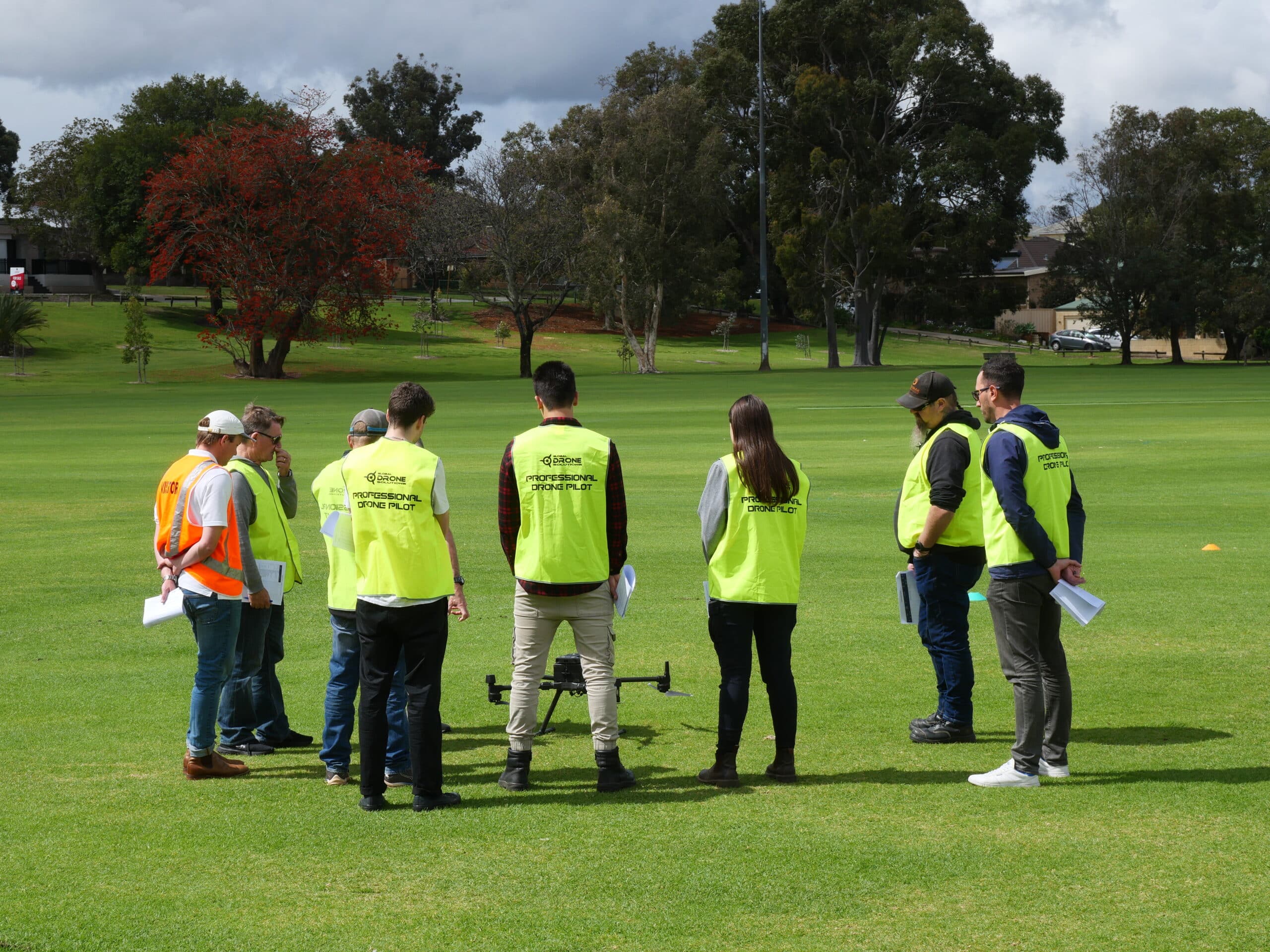
- Practical training that will deliver at least five hours of hands-on experience to give you the necessary skills for the safe and precise operation of a drone.
The course is typically spread over five days, and successful completion will result in your details being supplied to CASA so that a RePL can be issued and you become a fully qualified drone pilot.
- If you are going to use your drone for commercial work, it must be registered with CASA. Registration is free for drones weighing less than 500 grams and $40 annually for those that are heavier. The overall CASA drone licence cost is mainly made up of the cost of the training. As of August 2025, an estimate is $1,750 for a full RePL training course or $750 if you are converting to drones and already have aviation experience, such as a pilot’s licence.
- For certain industries, such as mining or search and rescue, you may also need an aeronautical radio operator certificate (AROC) so you can communicate with other pilots and with air traffic control.
Do I Need Insurance?
Although insurance is not a requirement for the operation of a commercial drone, it is recommended so you are covered in case of accidents, damage or claims against you. Possible cover includes:
- Public liability insurance if there are claims for property damage or injury caused by the drone operation.
- Drone equipment insurance that covers loss or damage for your drone and any equipment you use.
- Professional indemnity insurance to cover legal costs for claims of professional negligence.
Adequate insurance will reduce your risks and also means you appear a more credible and professional drone operator.
Operating Properly and Safely
Once you are qualified and operating your drone commercially, it is important you comply with CASA guidelines, so you operate safely. These include:
- Always being able to see the drone clearly so that accidents are avoided.
- Flying no higher than 120 metres unless operating in specific conditions and with CASA approval.
- Avoiding designated no-fly zones such as airports and areas with specific restrictions.
- Undertaking thorough pre-flight checks so your drone is in optimal condition before every flight.
- Being aware of local weather conditions so you avoid hazardous situations.
At Global Drone Solutions, we can help you gain all the skills you need to be able to comply with regulations and become a successful commercial drone pilot. We provide a variety of training and plenty of support. So get in touch to make a booking and get started on a rewarding career.