In the past decade, the demand for commercial drone pilots has rapidly grown as drones evolve from hobbyist gadgets into powerful tools for industries that are discovering the efficiency, cost savings, and innovation these high-tech devices bring to their operations. The Australian drone market has seen rapid growth and is expected to be worth $1.5 billion by 2033.
Today, drone pilots are no longer limited to photography or recreational flying; they are reshaping the business models of the construction, agriculture, real estate, public safety, and energy industries. What once required expensive equipment or posed safety risks, can now be done efficiently, inexpensively and safely. And as businesses realise the endless benefits of aerial technology, the demand for skilled drone operators continues to skyrocket.
For professionals looking to break into this exciting field, knowing where the opportunities lie is essential. Construction, agriculture, real estate, public safety, and energy are the top five industries hiring commercial drone pilots and leading the way in drone operations, offering diverse and lucrative opportunities for certified professionals.
1. Construction
The construction industry has rapidly embraced drones utilising their abilities for surveying, site mapping, project monitoring, and safety inspections. They have become a critical tool for enhancing efficiency, safety, and project management.
- Site Surveys and Inspections: What would have previously required extensive
manpower, heavy equipment, and long hours, is now completed in a fraction of the time with drones providing real-time aerial perspectives to collect accurate data. Additionally, this prevents surveyors having to be sent into hazardous areas or requiring scaffolding to inspect high structures. The drones can safely perform the tasks while delivering accurate results reducing the risks of accidents while also minimising project delays.
- Site Mapping and 3D Modelling: Drone pilots are commonly used in construction sites
to capture high-resolution imagery, generate 3D site models, and conduct topographic mapping that helps engineers and architects plan more precisely. Drone pilots with experience in mapping software and data analysis are particularly valuable, as they can turn raw drone footage into actionable insights.
- Monitoring Progress: Drones have become essential during active projects, where they
are used to track progress. Construction companies use the drone data to create detailed reports for stakeholders, providing visual proof of project status, compliance, and quality.
- Measuring Stockpiles: Materials such as gravel, dirt and sand can be accurately
measured, providing crucial information for estimating costs and managing inventory.
Cities are expanding and infrastructure projects are growing across the country, so expect to see the demand for skilled drone pilots in construction continue to climb. There has never been a better time to enter the drone industry, and construction offers consistent, large-scale opportunities that not only pay well but also provide long-term career stability.
2. Agriculture
In modern farming, drones are being used to monitor and spray crops, manage irrigation, and implement precision agriculture. Drone technology is allowing farmers to maximise yields while minimising costs and environmental impact.
- Monitoring Crop and Soil Health: Farmers are using drones to collect data on crop
health. The drones are fitted with multispectral and thermal sensors, which can detect issues like pest infestations, irrigation problems, or nutrient deficiencies before they become widespread.
- Real-Time Aerial Maps: By flying over large fields quickly, drones provide farmers with
high-res aerial maps and vegetation indexes that help them make informed decisions about planting, watering, and fertilising.
- Maintenance of Crops: As technology develops, drones are becoming an asset,
assisting in crop spraying, and delivering fertilisers, pesticides, and herbicides. This form of maintenance is more efficient and accurate than traditional ground equipment, reducing chemical waste, saving fuel, and ensuring healthier crops.
- Monitoring Livestock: Drones provide an efficient way to track animal movements,
assess grazing patterns and even monitor fence lines.
Within agriculture drone pilots are expected to work with specialised software to process data into usable insights, so as important as flight skills are, having technical knowledge is just as essential. As the global demand for food continues to rise, using drones in an agricultural setting is seen as a solution to increasing productivity while reducing labour and resource costs.
This industry offers drone pilots the chance to work closely with farming operations, directly contributing to food security and sustainable agriculture practices worldwide.
3. Real Estate
The real estate industry was one of the first commercial sectors to adopt drones on a large scale. Providing aerial photography and video, drones offered a marketing advantage assisting in the sales of residential and commercial properties.
Today, aerial footage has become a standard expectation in real estate marketing, making drone pilots highly sought after by agencies, property developers, and even individual sellers.
- Aerial Images and Cinematic Videos: Drone pilots provide stunning aerial images and
cinematic videos, showcasing properties from angles that traditional photography simply cannot capture. For residential homes, aerial views provide an insight into the land size, neighbourhood features, and proximity to local amenities. For commercial properties, drones help capture the scale of buildings, parking areas, and surrounding infrastructure. These visuals give investors and buyers a clearer picture of a property’s potential.
- Property Inspections: Inspecting properties is made easier with drones as they can
access hard to reach areas such as roofs and facades. Drones provide detailed imagery without the risks of climbing ladders or scaffolding.
- Virtual Tours: Some real estate companies also use drones to generate 3D tours,
mapping large parcels of land or development projects for potential buyers.
To work within the real estate industry, drone pilots should possess strong creative skills in addition to having technical flying abilities. This is to ensure the images and videos captured are visually appealing, and market ready.
With property development and sales remaining a cornerstone of the global economy, the real estate sector will continue to generate steady opportunities for drone pilots with an eye for detail and creativity.
4. Public Safety
Drones are increasingly being deployed as vital tools for emergency services, including police, fire departments, and search-and-rescue teams, who rely on them for surveillance, disaster response, and emergency assessments. Time is critical when responding to an emergency and drones provide rapid situational awareness that can save lives.
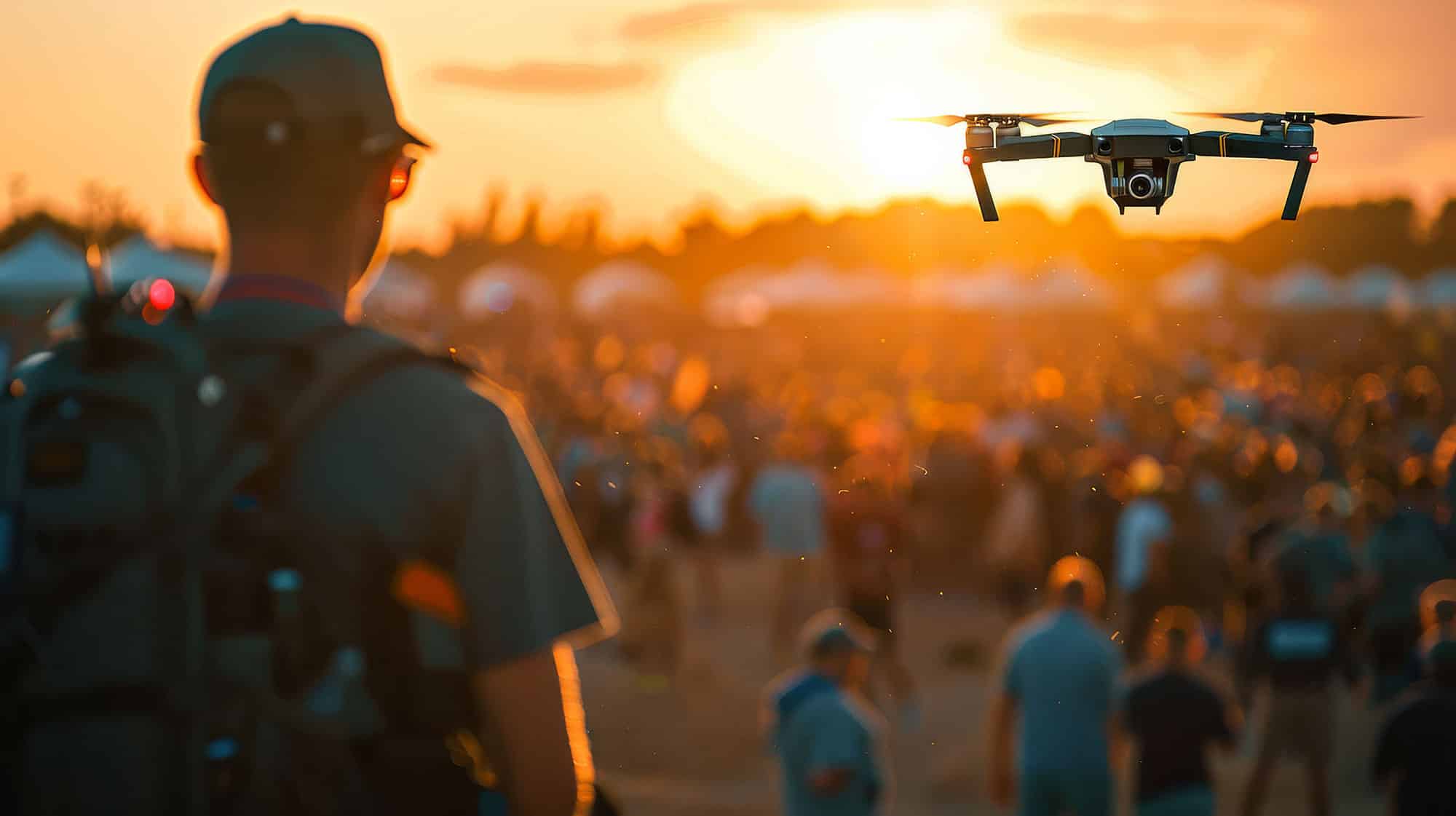
- Monitoring Traffic and Crime Scenes: Drone pilots use UAVs to monitor crowds,
manage traffic and assess crime scenes. They oversee large public events, adding an extra layer of security and crowd management; and scour crime scenes, capturing detailed images that provide vital evidence in investigations.
- Detecting Hotspots: Drones aid fire departments during wildfires or structural fires.
Equipped with thermal cameras, they highlight hotspots allowing crews to focus their efforts more effectively while staying safe.
- Search-and-Rescue Operations: These situations rely heavily on drones to cover large,
difficult terrains quickly. Mountains, forests, or disaster zones can be unsafe or even impossible environments for helicopters to manoeuvre, but drones can be deployed effortlessly and at a fraction of the cost. Additionally, with thermal imaging, drone pilots can locate missing persons in low visibility conditions, such as at night or in heavy smoke.
- Disaster Assessment: Public safety drones are also used for disaster management,
such as assessing damage after hurricanes, floods, or earthquakes, enabling faster recovery efforts.
Working in this sector, pilots should expect to often face high-pressure environments where precision and reliability are crucial. Many public safety departments are now hiring or training certified drone pilots, as they recognise how important their role is in critical operations.
As the number of natural disasters continues to rise and urban environments become more complex, public safety will increasingly rely on drone pilots, significantly expanding their demand.
5. Energy & Utilities
The energy and utilities sector has become one of the largest adopters of drone technology. Inspecting power lines, wind turbines, pipelines, and solar farms, drones provide efficiency and safety, while reducing risks and maintenance costs.
- Inspecting Infrastructure: Power lines, wind turbines, pipelines, and solar farms were
once inspected by surveyors climbing tall structures, shutting down operations, or deploying costly helicopters. Today, drone pilots can perform these inspections quickly, safely, and at a much lower cost.
- LiDAR, and Thermal Imaging: Equipped with high-resolution cameras and sensors,
drones can detect cracks, corrosion, overheating, or other potential issues before they lead to failures. They enable close-up inspections of turbine blades and can identify malfunctioning panels through thermal imaging. This allows for targeted repairs and maximises energy efficiency without requiring technicians to climb, significantly reducing risks.
- Environmental Maintenance: Oil and gas companies employ drones to monitor
pipelines and offshore rigs, minimising environmental risks by spotting leaks or weak points early.
- Mapping and Surveying: Drone pilots often work alongside engineers and data
analysts, to convert aerial footage into technical reports for maintenance planning and regulatory compliance.
As the world transitions toward renewable energy and smart grids, the demand for drone inspections is growing, creating a robust job market for certified pilots. Some of the most lucrative opportunities can be found in this sector, as utility companies and energy providers are willing to invest heavily in technologies that improve safety, cut costs, and prevent downtime.
Conclusion
The opportunities created for certified pilots continues to broaden as the rise of drone technology expands. From monitoring massive construction projects and managing agricultural fields to showcasing properties, saving lives, and maintaining critical infrastructure, drones have become indispensable tools of modern business and safety.
These top five industries offer diverse career paths for anyone wanting to be a commercial drone pilot, and who can combine their technical skills with logistical thinking providing a meaningful impact. For aspiring drone pilots, the message is clear: this is a career with vast potential and growing demand.
By gaining certification and building expertise, professionals can position themselves at the forefront of a fast-growing industry that is reshaping the way the world works from above.
Ready to Become a Drone Pilot?
Take advantage of the booming demand for drone pilots and obtain the proper certification.
Industries like construction, agriculture, and real estate, are crying out for commercial operators, regulated by the Civil Aviation Safety Authority (CASA), to fly drones legally and professionally. The main pathways to become a certified commercial drone pilot are:
- RePL (Remote Pilot Licence): This licence supports those who wish to operate drones over 2 kg for commercial purposes. To achieve an RePL, training must include both theory and practical assessments, that cover topics such as aviation law, airspace awareness, meteorology, navigation, and flight planning. Training must be completed via a CASA-approved training provider who will assess pilots before granting them their licence.
- ReOC (Remote Operator’s Certificate): Companies must obtain an ReOC, legally allowing their employees to work as a drone pilot. This certificate allows businesses to conduct a wider range of drone operations. Individuals can get their own ReOC, allowing them to operate independently or work under the umbrella of a company that already holds one.
- Excluded Category (sub-2 kg commercial use): If your drone weighs less than 2 kg, you have the option to fly commercially without a licence, but you must still notify CASA and follow standard operating rules. This route can get you on the career ladder a little faster, but it will limit the type of operations you can undertake. Most high-paying industries prefer or require fully licensed pilots, so certification will open many doors.
Becoming a drone pilot is one of the most exciting and fulfilling career paths in today’s rapidly evolving job market. By gaining your RePL and improving your practical flying experience, you position yourself as a qualified professional capable of handling complex drone operations safely and legally.
With Global Drone Solutions the certification process takes just a few weeks and is an investment that pays off with rewarding career opportunities across multiple industries. Whether your interest is in construction and agriculture, or real estate and public safety, the increasing need of drones means certified pilots are in high demand. Your role will combine technical expertise with creativity and problem-solving, reaping the benefits of both flexibility and excellent earning potential.
When you gain your certificate at Global Drone Solutions, you unlock opportunities to work across diverse fields while contributing to safer, smarter, and more efficient operations. So, if you’re ready to launch into a career that blends technology with real-world impact, contact us today and enjoy the rewarding and future-proof choice of being a drone pilot.